
Collaborating with Life: Ana Laura Cantera on Rethinking Materials Through Living Systems
Ana Laura Cantera is a bioelectronic artist, researcher, and professor who develops biomaterials, specialising in grown designs made from mushroom mycelium. Her work centres on concepts of nature, territory, and horizontal entanglements with non-human organisms from a decolonial perspective.
Projects like Metamorphic landscapes and Tissues from the uterus position bio-interactive art as a form of ecological research that challenges extractive ways of thinking and proposes more interdependent relationships between humans, materials, and ecosystems, blurring the boundaries between our internal biological systems and the external environment. They show how art, science, and technology can shift our perspective from controlling materials toward collaborating with living processes and systems. Overall, her work invites a rethinking of material culture as something relational, embodied, and deeply entangled with the conditions of life.
In this interview, we explore our relationship to matter itself: how we relate to materiality and understand the living ecosystems that sustain our world. We also consider the possibility of imagining alternative futures through new forms of material culture that are organic, living, and evolving—fostering relationships of care between humans and non-human organisms.
Your work bridges art, science and environmental concerns. Where did that fascination begin? In the lab, in nature, or through philosophical questions about our relationship with the environment?
The transdisciplinary crossings formally began during my academic trajectory in the Master’s Program in Electronic Arts at the Universidad Nacional de Tres de Febrero. Through this program, I was able to bring together my worlds: my interest in art and everything that called to me in my experiences of open-water swimming and scuba diving. In every immersion I carried out as a hobby, I perceived specific problems in each territory that I could, and did not want to, separate from my artistic research.
Electronic arts enabled me, through technology, to incorporate these aspects: polluted bodies of water, eutrophication, water scarcity, and the interdependence among all the organisms that inhabit the planet and its ecosystems. I can say that my fascination with the art–science–environment triad began with placing my body in the territory: the in situ experience moved into artistic practices and later into theory, as my first book on this type of work will be published soon.
Why is it important, now, to develop new materials and aesthetic languages that rethink our relationship with living matter?
The ecological crisis is not only a technical failure but a perceptual and relational one. The dominant material culture has been built on the assumption that matter is inert, available, and infinitely substitutable; therefore, environmental collapse persists even as technologies become more efficient, since the underlying sensibility remains extractive. Developing new materials (such as mycelial, biodegradable or symbiotic ones) matters less as an innovation in production than as a reconfiguration of experience: they demand care, time, humidity, decay and coexistence. They cannot be fully controlled; they must be accompanied.
In this sense, new aesthetic languages are necessary because they operate where regulation and information do not reach, at the level of perception and habit. By working with living or quasi-living matter, each artwork displaces the spectator from the position of external observer to that of participant within a metabolic network. The piece stops representing nature and instead stages interdependence. What appears is not “environment” as scenery, but a shared condition: growth, vulnerability, contamination, and transformation.
Thus, the importance today lies in ethics rather than style. These materials lend crises duration and corporeality: they rot, mutate, dry out, and regenerate. They make it clear that sustaining life is incompatible with permanence, accumulation, and absolute control. The aesthetic becomes a training ground for another form of coexistence -one based not on domination of matter but on negotiation with it.
You describe “placing your body in the territory,” encountering polluted waters and ecological imbalance during your dives. How did those direct experiences shape your sense of responsibility as an artist? Did they change the kinds of questions you felt your work needed to address? Can you share an example of a project to describe this approach in your practice?
Direct experiences in the territory have been fundamental in shaping my artistic responsibility. When you place your body in specific environments (diving into rivers, observing ecosystems up close, or encountering polluted waters), you realise that ecological imbalance is not an abstract issue but something materially present and embodied. Those encounters generate a shift: the work can no longer remain only representational. Instead, it becomes necessary to think about artistic practice as a form of situated research and ecological engagement. In my case, these experiences reinforced the idea that artistic practice can function as a space to explore new relationships with living matter and with non-human organisms. My work increasingly began to ask how we might move beyond an anthropocentric framework and develop forms of co-creation with other species and entities. Rather than treating nature as a passive resource, I became interested in collaborating with biological processes themselves—working with organisms, residues, and materials that already belong to ecological cycles. An example of this approach is the project Territorial Inhalations. In this work, I explore the act of breathing as a means of establishing a direct relationship between the body and the environment. The project emerged from experiences in territories where the quality of air and water is deeply affected by industrial and ecological transformations. Through different devices and performative actions, the work focuses on the exchange that occurs with every breath, making visible how human bodies are constantly permeated by the environments they inhabit.
Territorial Inhalations proposes breathing as both a poetic and political gesture. It reflects on how territories literally enter our bodies and how environmental degradation becomes an embodied experience. By emphasising this intimate connection between respiration and territory, the project seeks to generate awareness of our shared vulnerability with ecosystems and to question the idea that human bodies exist separately from their environments. In this sense, the artwork attempts to open a space for thinking about ecological responsibility not as an abstract discourse, but as something that emerges from embodied encounters with the world.
“Rather than treating nature as a passive resource, I became interested in collaborating with biological processes themselves—working with organisms, residues, and materials that already belong to ecological cycles.”
This statement provokes a pertinent mental shift: “the ecological crisis is not only a technical failure but a perceptual and relational one.” Do you see working with living materials as a way of imagining different futures, perhaps moving beyond dystopian narratives, or more as a way of learning how to coexist and co-create with other forms of life?
The phrase reveals the limits of a worldview that has historically separated humans from the living systems that sustain them. In that sense, the problem is not simply that we lack better technologies, but that we have developed ways of perceiving, organising, and valuing the world that obscure our deep interdependence with other forms of life.
Working with living materials became important in my practice precisely because it challenges those assumptions. When you collaborate with biological processes, such as fungal mycelium or other biomaterials, the artist is no longer the sole author of the work. The material has its own rhythms, temporalities, and conditions for growth. The process becomes one of negotiation, care, and attentiveness, in which form emerges through interaction and convergence rather than through control.
At the same time, these practices open a speculative dimension. Working with living matter allows us to prototype alternative relationships with materials and ecosystems, suggesting that other material cultures and more hopeful futures might be possible. Rather than focusing solely on dystopian scenarios, I see this approach as a way of cultivating ecological imagination. It proposes tangible models of how we might live and create differently with other species. Through these processes, artistic practice can function as a space for exploring regenerative possibilities and for imagining futures grounded in collaboration, interdependence, and more-than-human forms of life.
What projects are you currently developing, and what key questions are guiding your research with living materials? What kinds of symbiotic relationships or ecological interactions are you exploring? Are there particular challenges or problems you hope your practice might help address?
I am currently developing two interconnected projects that work with living and relational materials to reflect on care, reproduction, and multispecies coexistence.
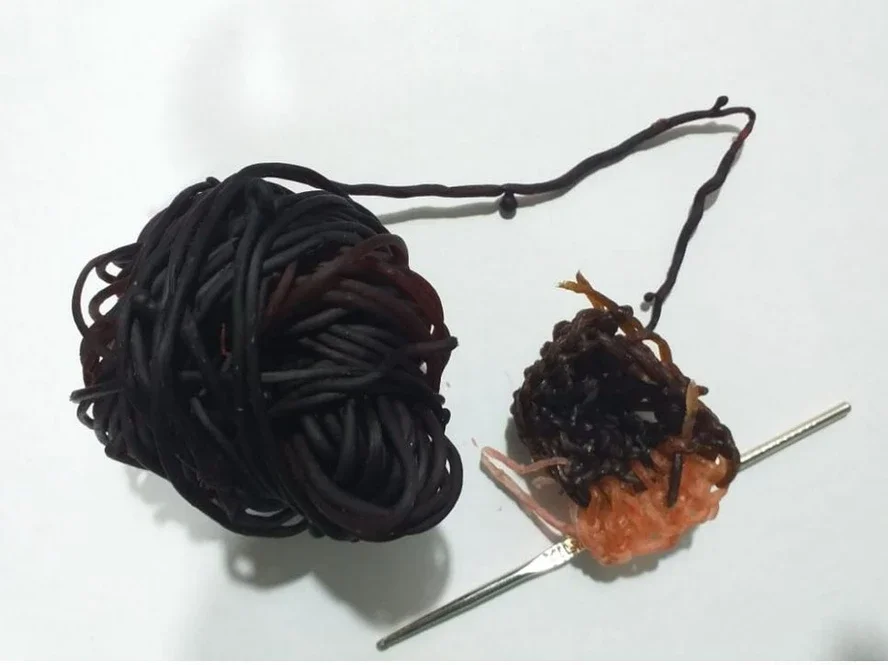
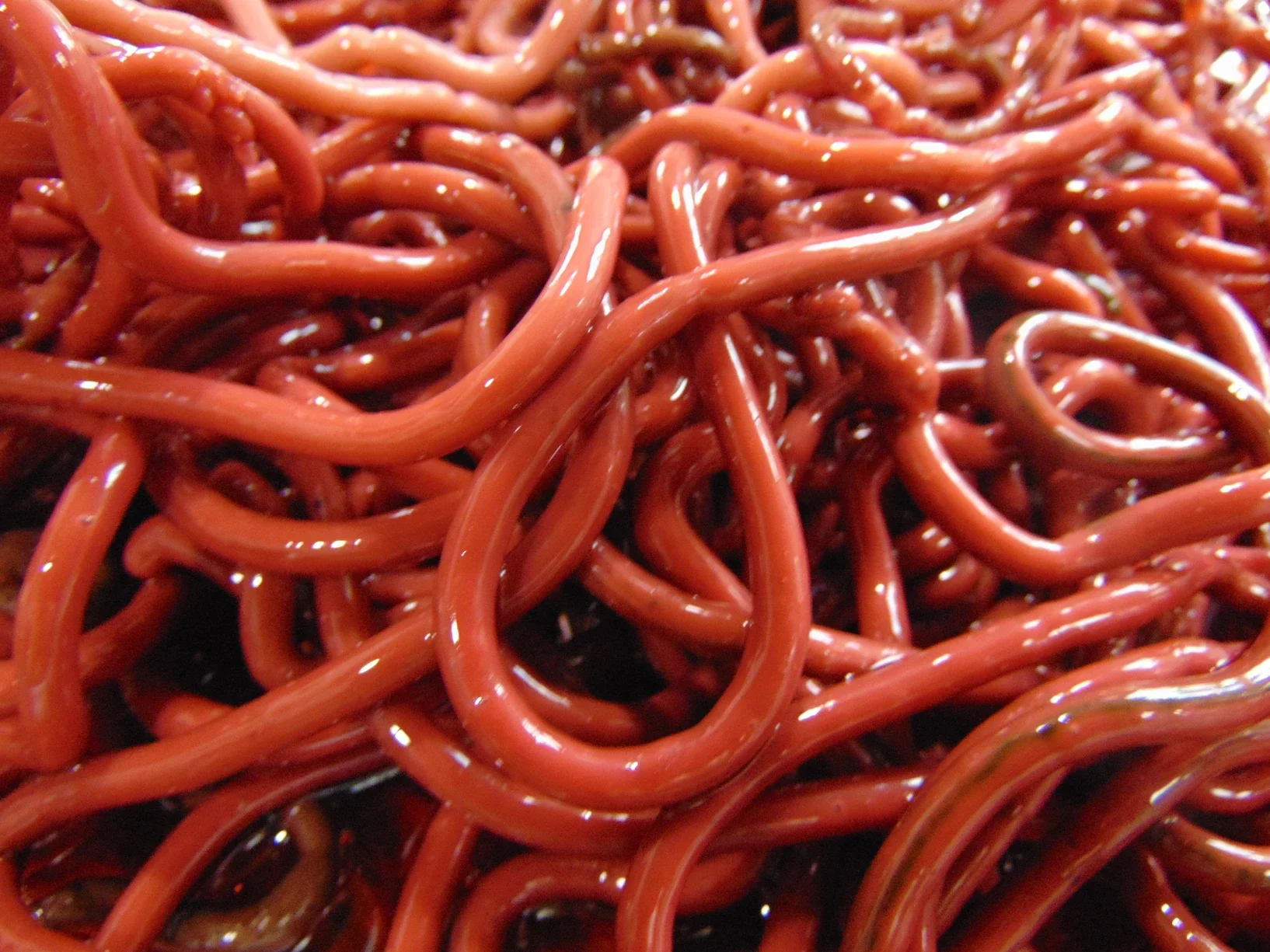
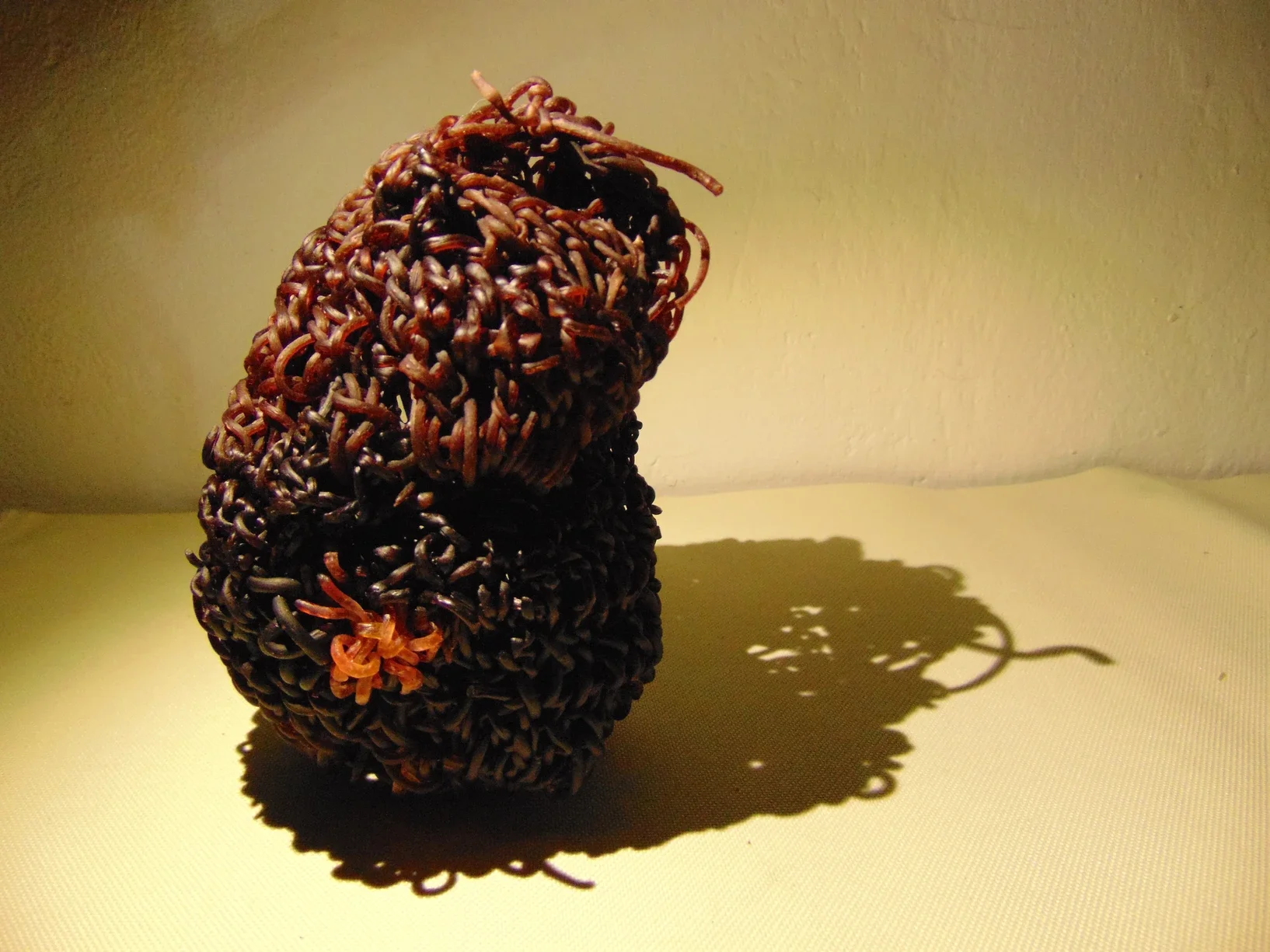
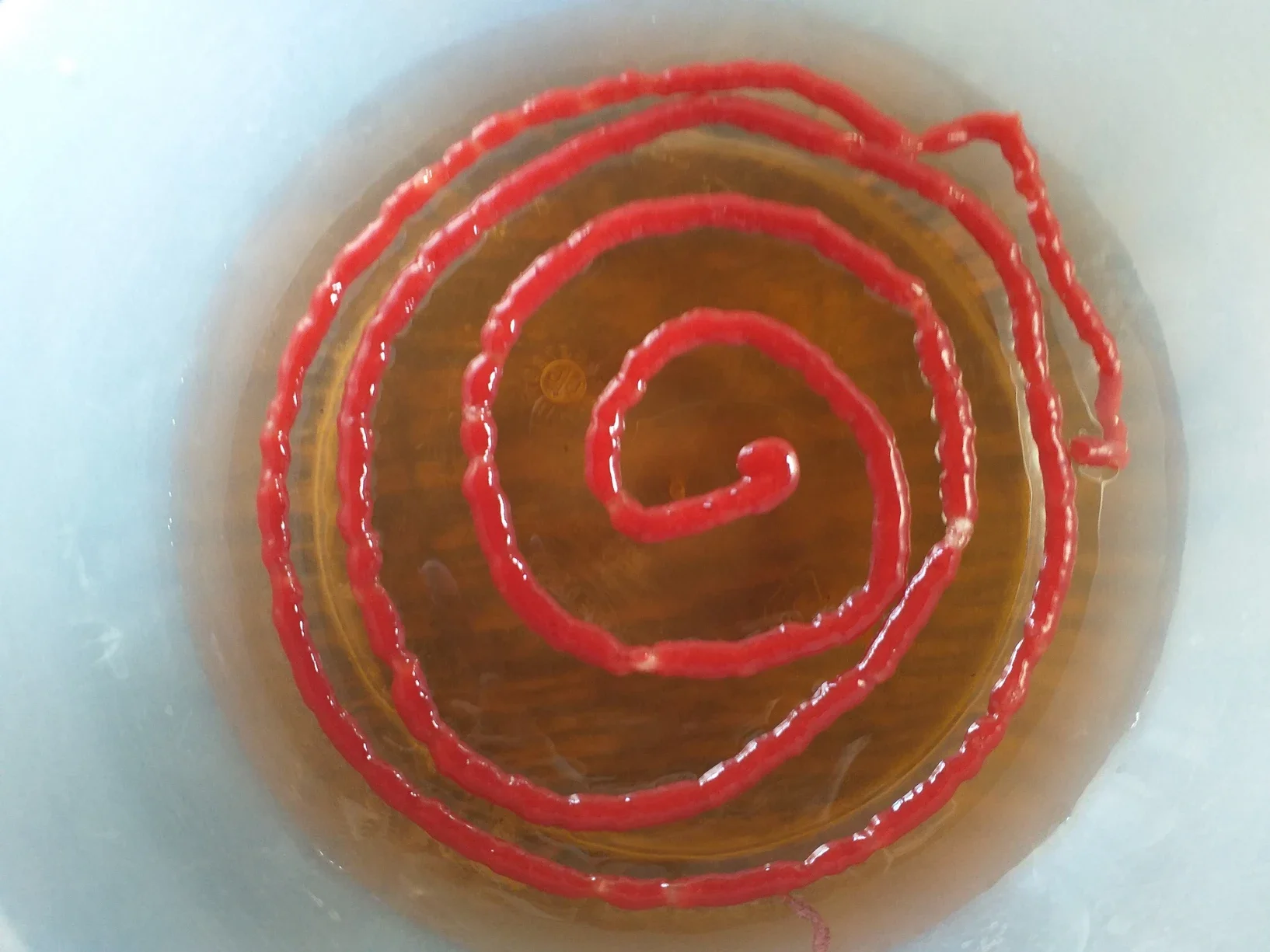
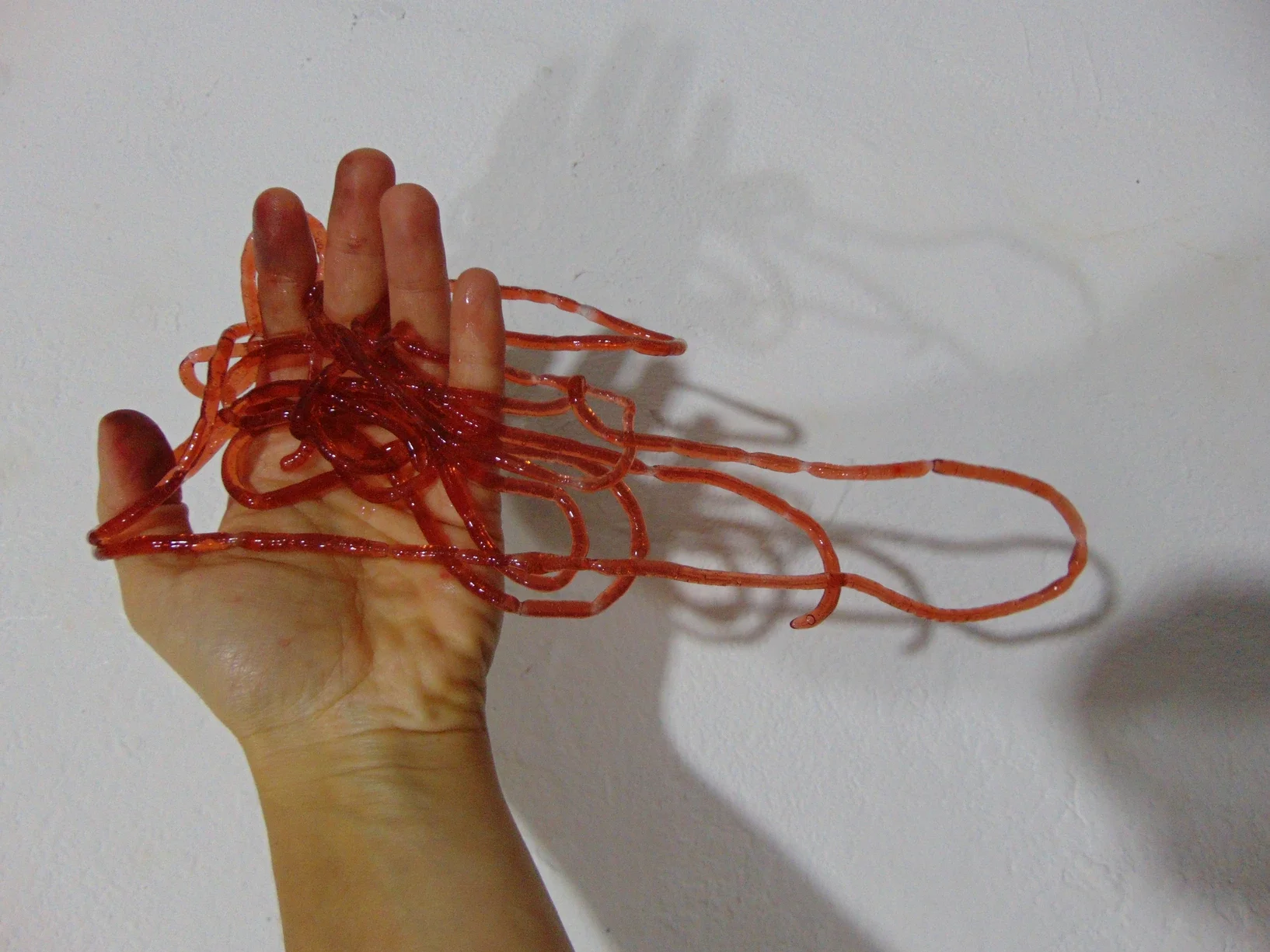
The first is a piece made from threads produced with my own breast milk, continuing the series Tissues from the uterus, which was created using my menstrual blood. This ongoing work explores the possibility of bringing a bodily fluid associated with reproduction and care into the field of art. I understand breast milk as a relational material. It is not only a nutritive substance but also a biological archive of relationships: it carries immunological memory, microbiota, bodily time, and affective transfer. Each drop contains a history of care, fatigue, interrupted sleep, growth, and dependency. By transforming milk into thread and later into textile structures, the work displaces the fluid from its intimate circulation into a visible materiality. This shift allows the piece to question the often invisible economies of care and reproduction, while also bringing forward the tensions and prejudices surrounding breastfeeding within contemporary productive systems, where the possibility of nursing increasingly appears as an exception rather than a supported practice.
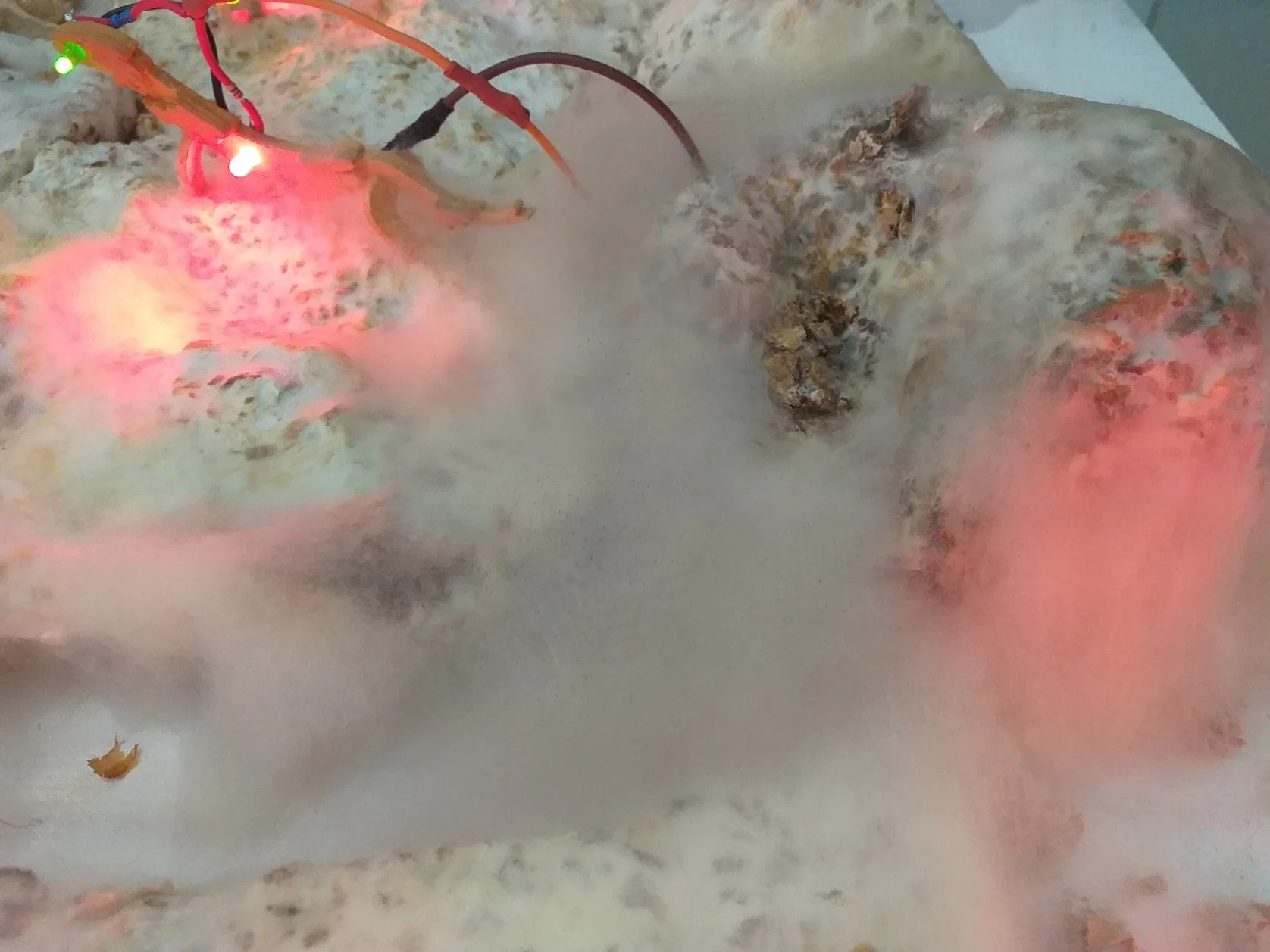
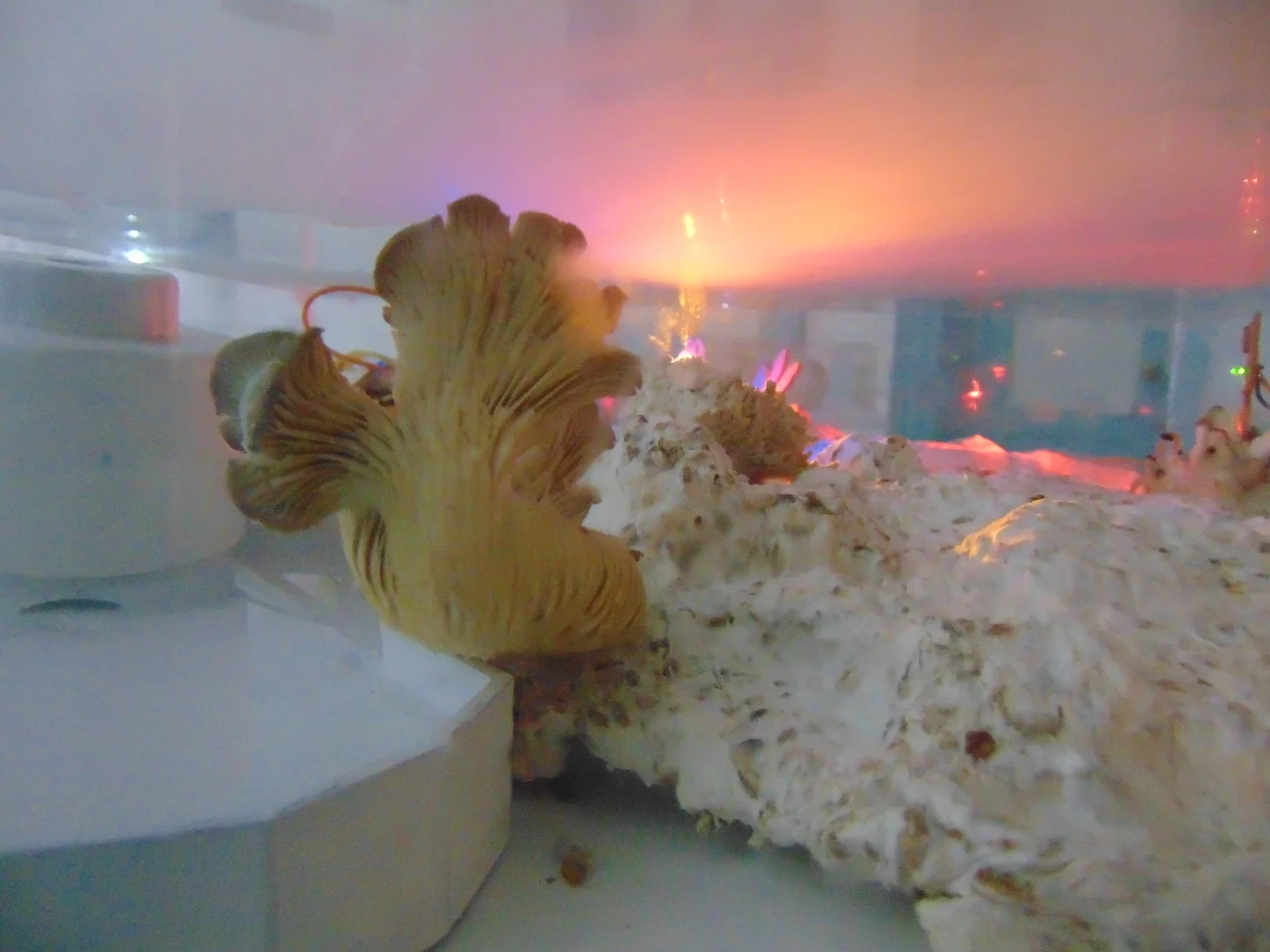
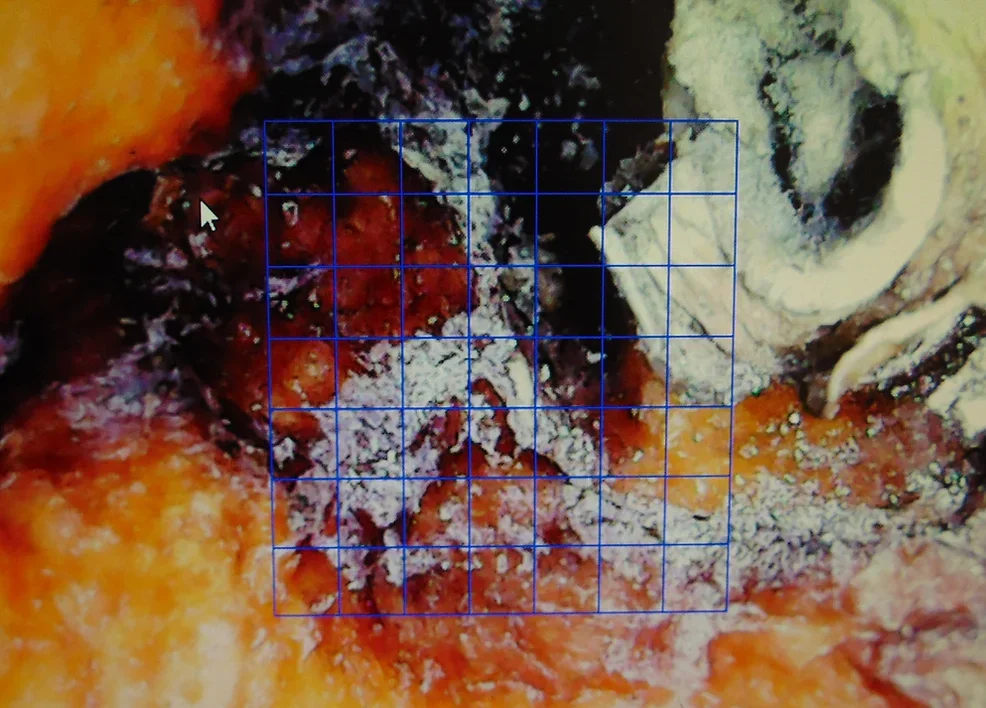
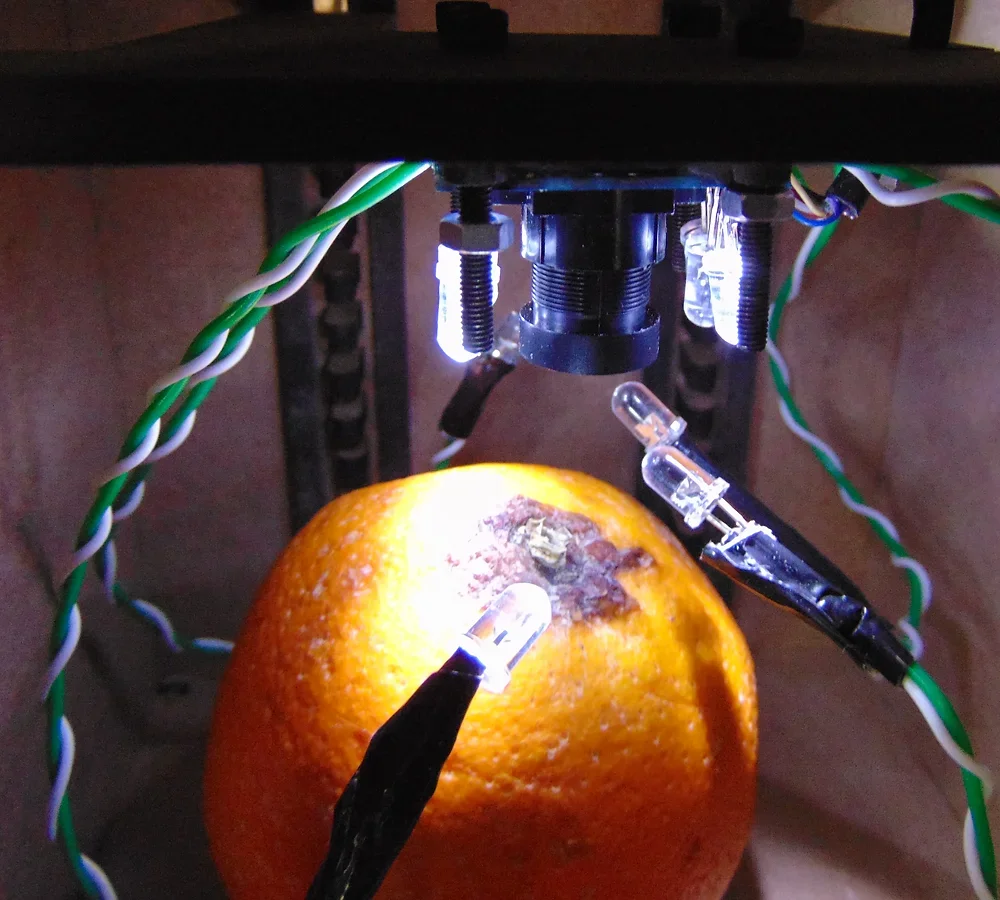
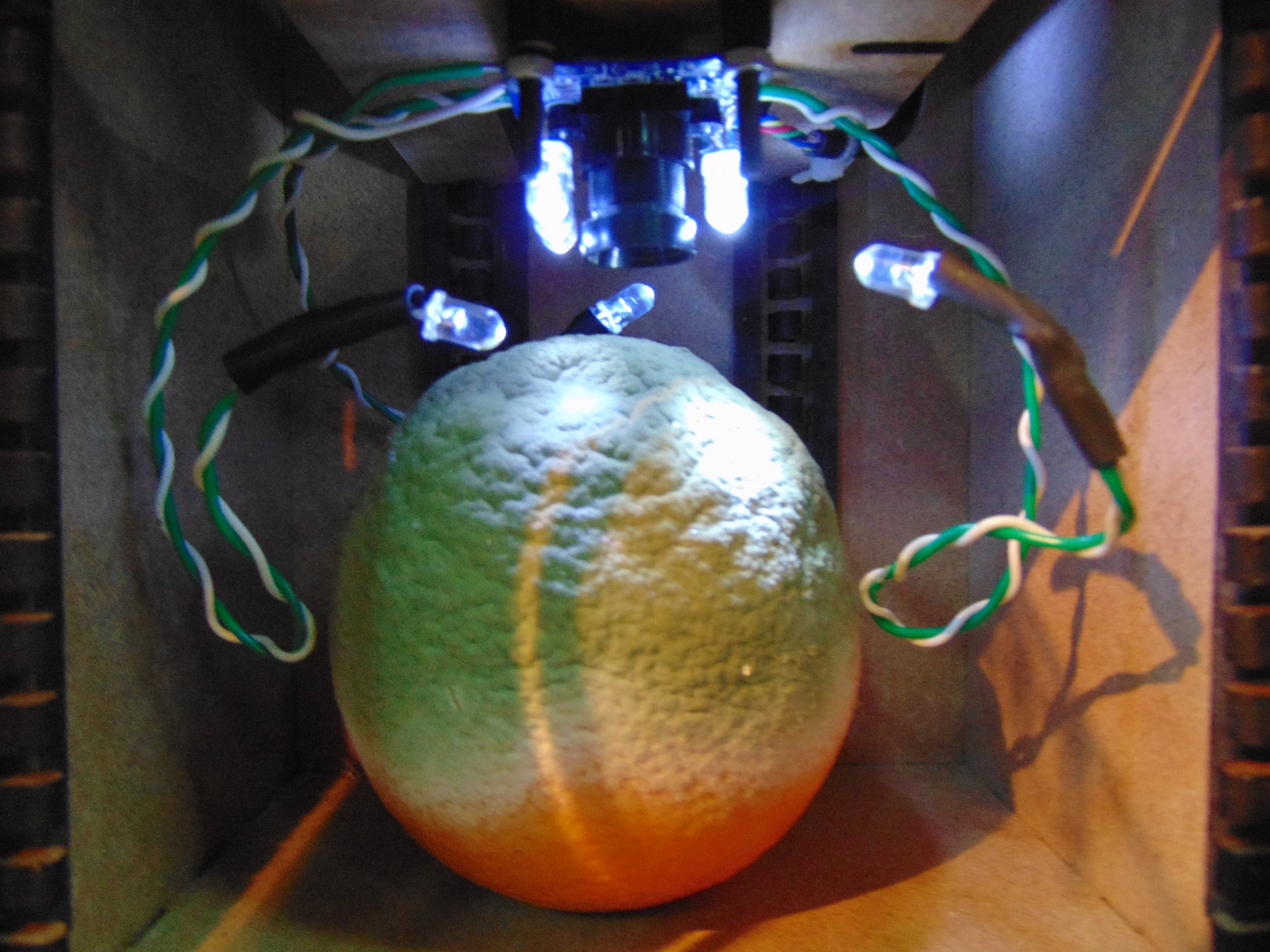
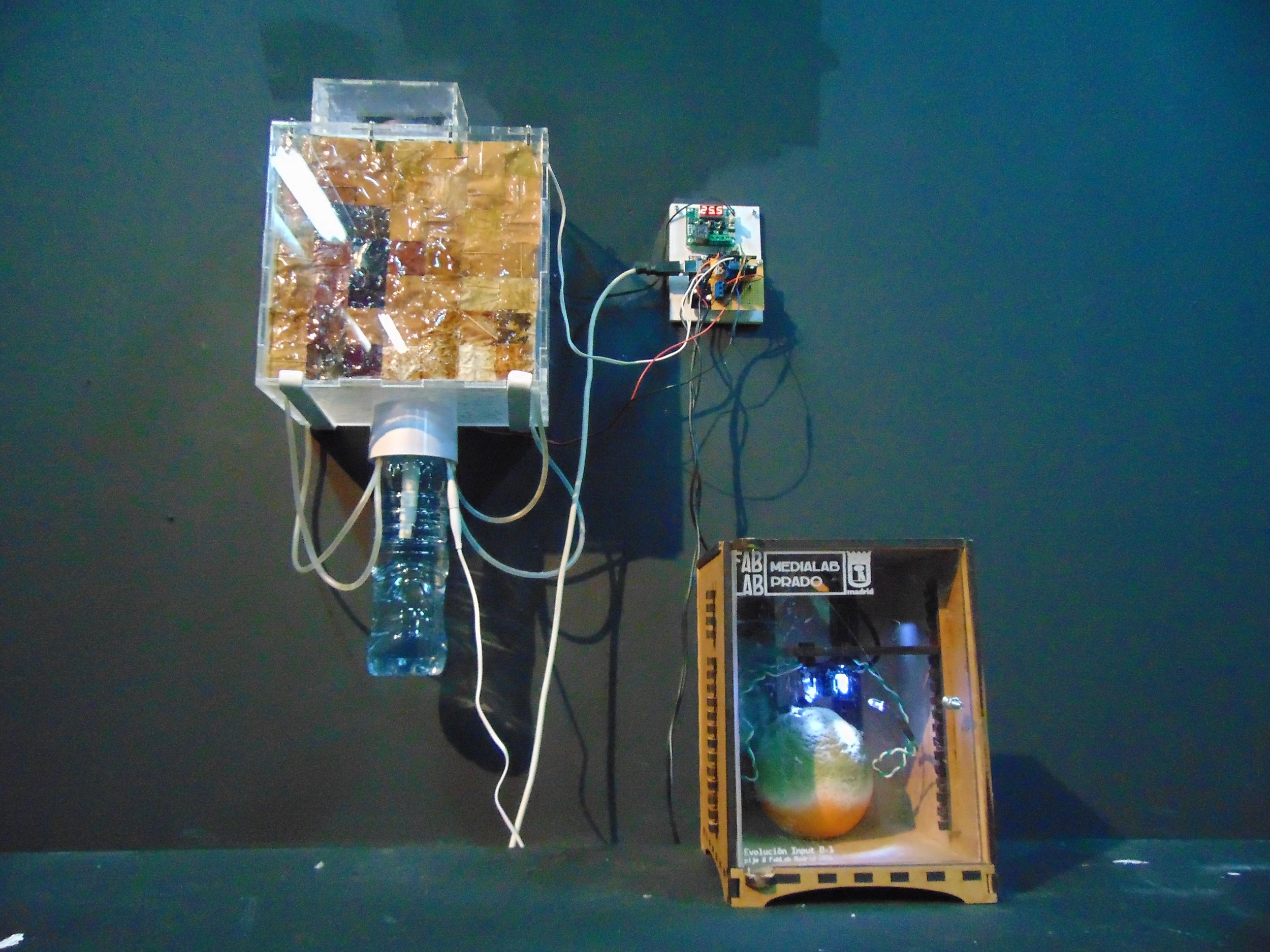
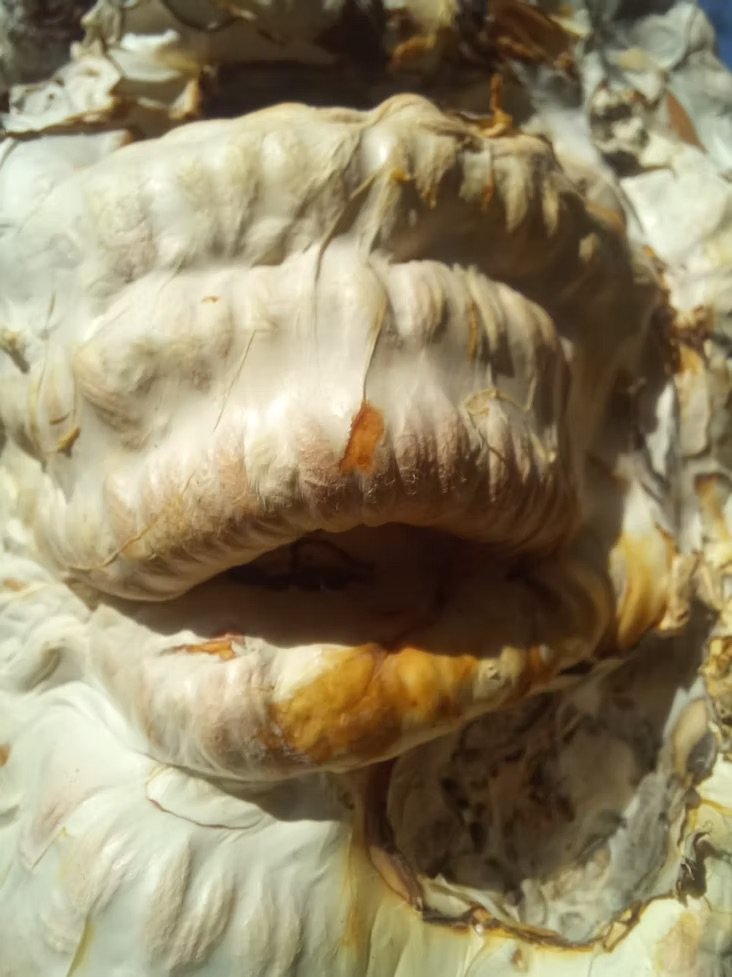
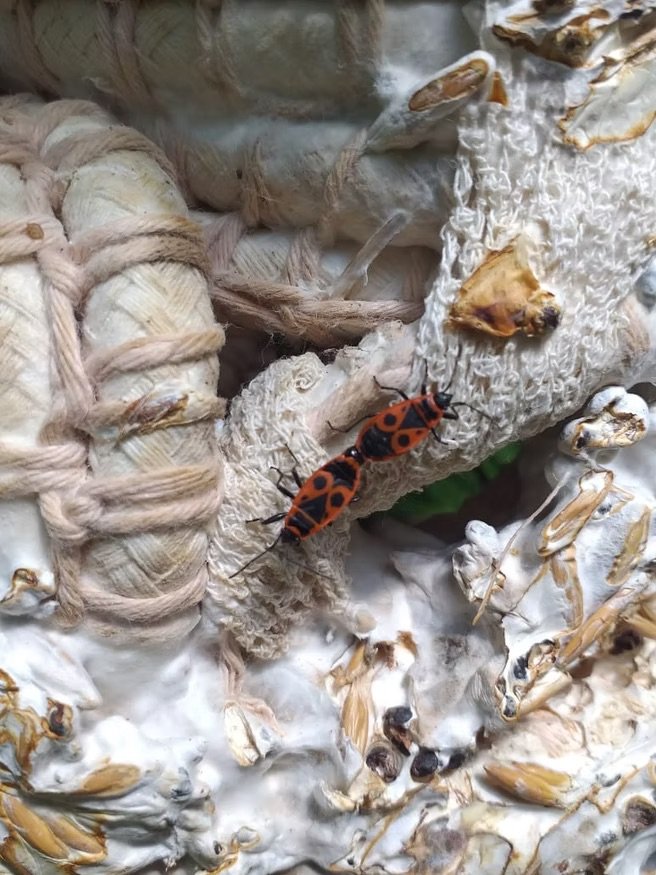
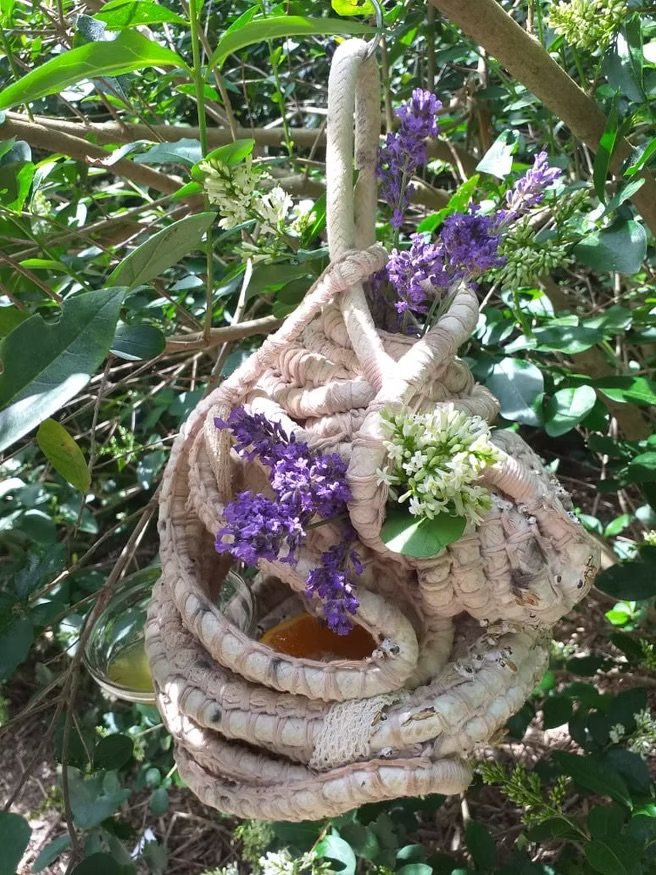
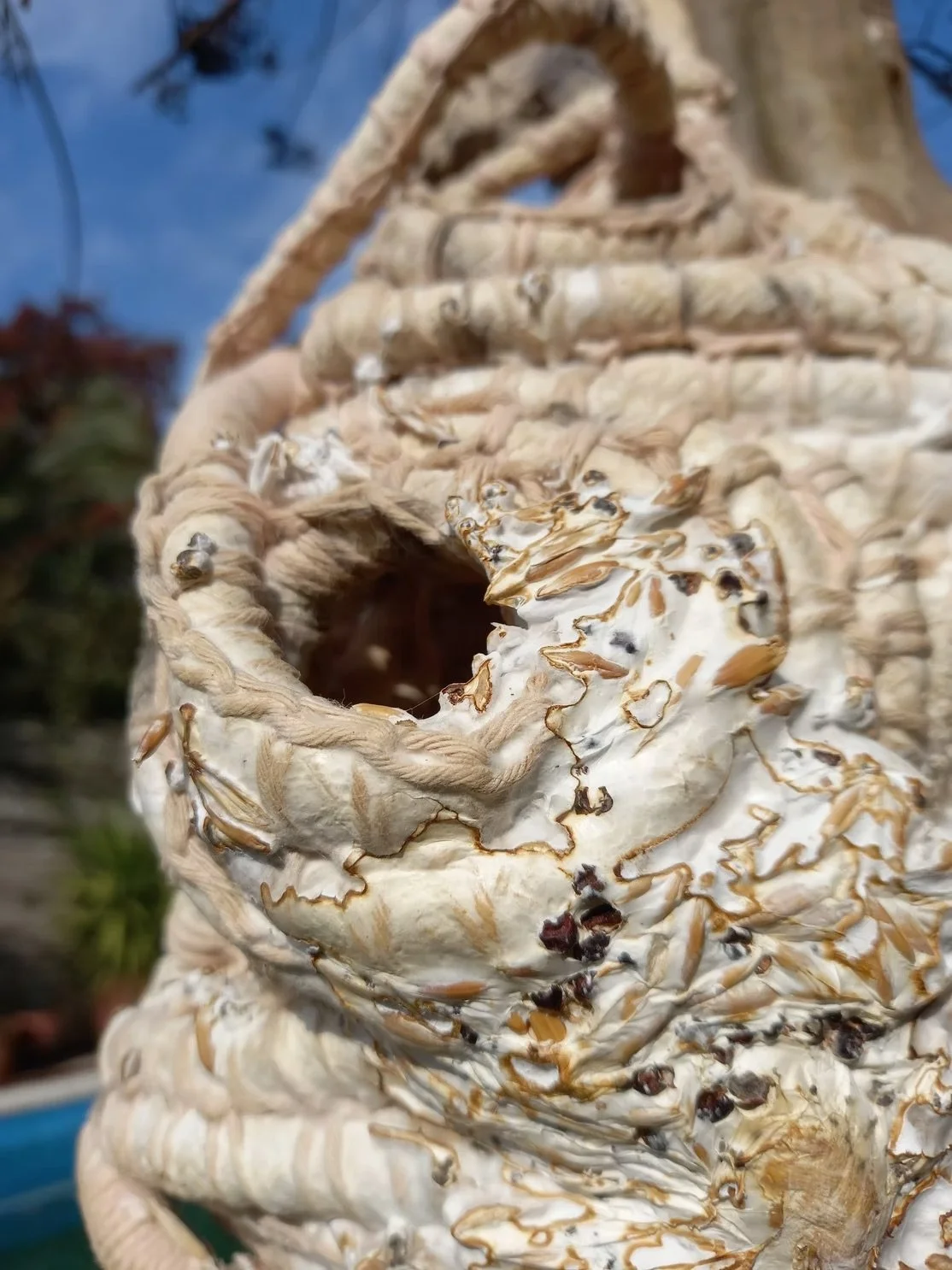
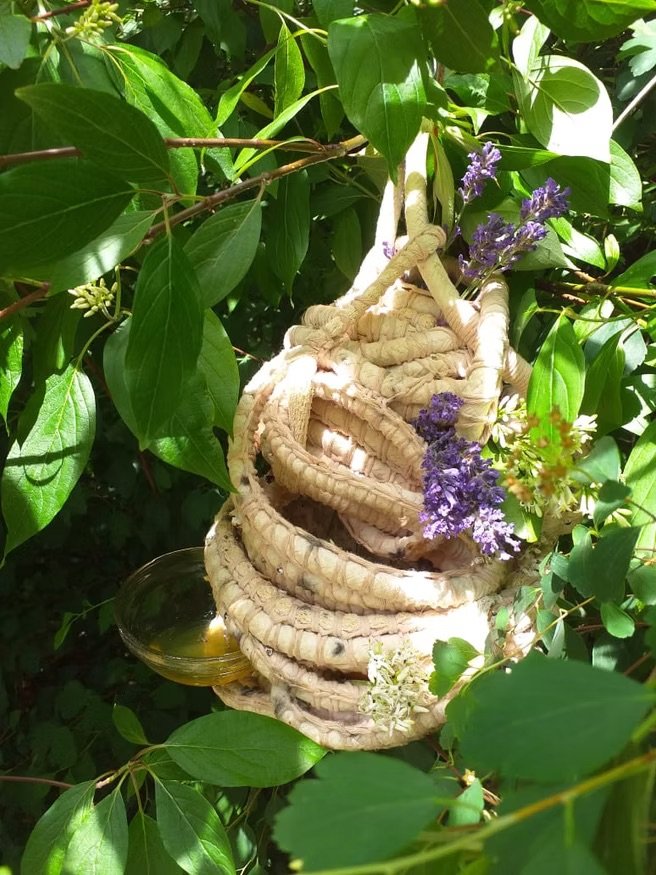
At the same time, I continue developing Habitabilities for wounded relationships, a project that creates small hospitality structures for urban pollinators made from fungal mycelium. The guiding question of this work is: how might our relationships with the environment change if our creations and devices were designed to coexist with and invite other forms of life? The project explores the potential of fungal biomaterials to facilitate ecological interactions among diverse living entities within specific territories, while also functioning as a reparative gesture that seeks to redirect the current trajectory of ecological despair.
Across both projects, living or organic materials are not passive mediums but active participants. They condition the process, introduce unpredictability, and shape the work's final form. My artistic practice, therefore, operates as a collaborative field where human and nonhuman agencies intersect. Rather than controlling matter, I am interested in negotiating with it, and allowing myself to be affected by it, understanding artistic production as a site where care, ecological relationships, and embodied knowledge can be reimagined.
Working with living systems, where materials grow, transform, and even participate in the creative process, challenges the long-standing idea that materials are inert resources. Does this shift imply that we should begin to care for things differently if they are now living (or alive)? Do you see your work as encouraging forms of mutual care between humans, materials, and environments?
Looking ahead, what kinds of relationships do you hope might emerge from these practices, and how could they transform the way we live, think and act in the world?
Working with living systems implies shifting a deeply rooted modern idea: that materials are passive or inert resources. In my artistic practice, I try to question this perspective precisely. Many of my works are built from biomaterials that not only constitute the substance of the artwork but also actively participate in its transformation. In projects where I cultivate organisms or materials through biological processes, the material does not simply function as a support: it has agency, it grows, transforms, degrades, and responds to its environment, thereby shaping the course of the piece itself.
From this perspective, this shift invites us to reconsider how we relate to “things.” When materials are alive or reveal vital processes, they cease to be mere objects and become companions in the process. In my work, I think of creation as a form of co-production among species, in which humans, organisms, and environments participate in the generation of the artwork. This also implies an ethical dimension: caring for the material's living conditions, attending to its biological rhythms, and accepting that the work may change, grow, or even disappear. In this sense, art becomes a practice of attention and care toward what we usually treat as a resource.
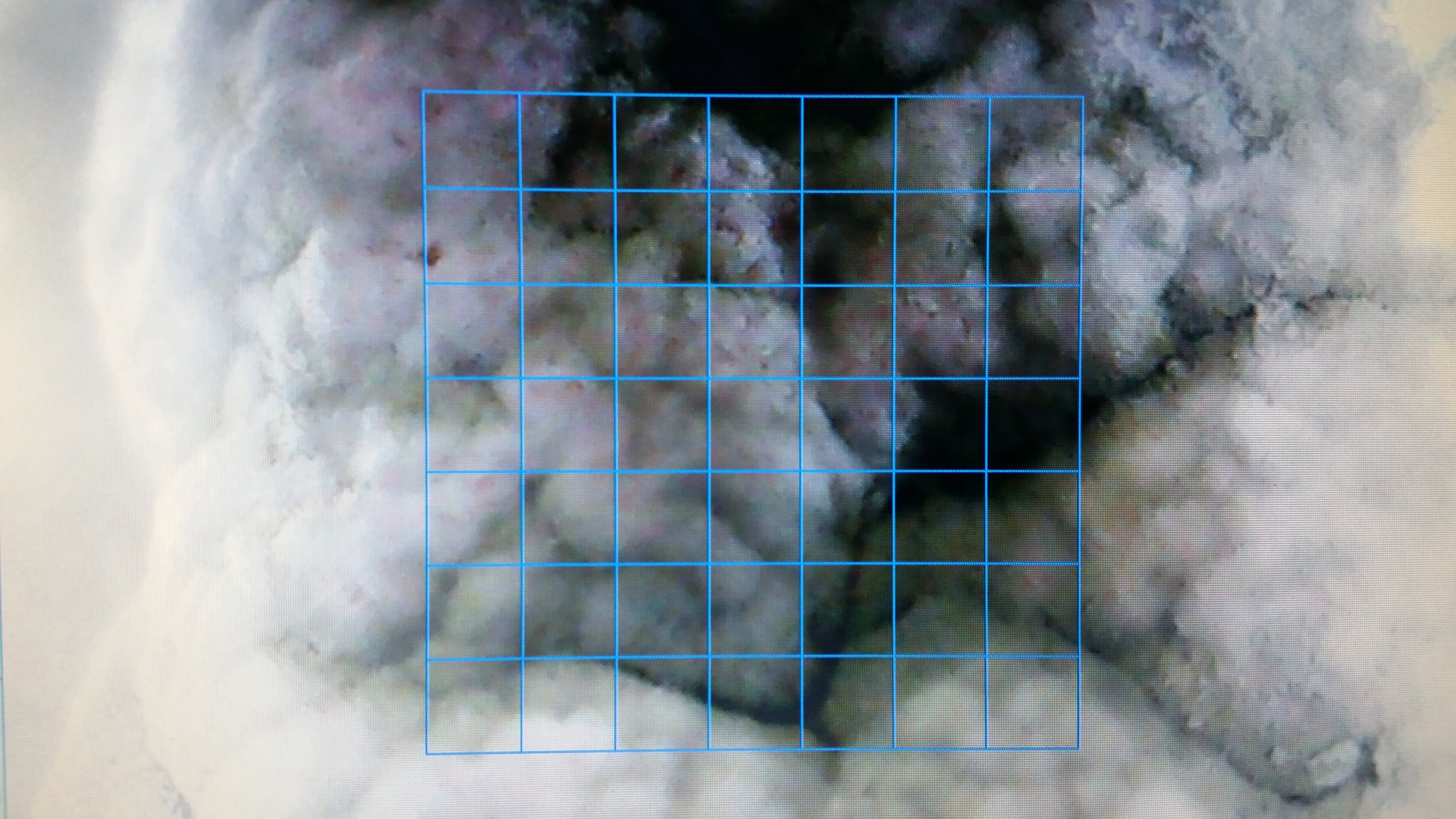
I am interested in how the work might suggest forms of mutual care between humans, materials, and environments. In several of my installations, living ecosystems must be maintained (through temperature, humidity, and substrates) to continue to exist. This shifts the figure of the artist toward that of someone who accompanies or cares for more-than-human processes. This position seeks to decenter anthropocentrism and open the possibility of more horizontal relationships with other organisms and with territories.
At the same time, working with living organisms introduces a different temporal dimension: materials have their own cycles, rhythms, and vulnerabilities. Integrating these temporalities into artistic practice means recognising that the work is never fully closed, but remains in continuous transformation. This instability can also be understood as a form of learning about how to coexist with vital processes that we do not fully control.
Looking ahead, what interests me is imagining relationships of coexistence and co-creation that may emerge from these practices. Working with living organisms reminds us that we exist within networks of interdependence: our bodies, our technologies, and our landscapes are deeply intertwined with other forms of life. If we take that interdependence seriously, other ways of designing materials, producing objects, and inhabiting the world might emerge—approaches that are less extractive and more collaborative with ecological processes.
In this sense, these practices do not only speculate about possible futures; they also operate in the present. They train us to perceive materials as dynamic entities with which we coexist, rather than simply as available resources. Imagining and practising these relationships today may open the door to ways of living in which care, reciprocity, and attention to the more-than-human become central to how we think, act, and create in the world.
“The ecological crisis is not only a technical failure but a perceptual and relational one.”
Welcome to The Art in STEAM podcast
Expect to spark ideas through personal stories told by women in STEAM, from robotics to technology, digital media and the climate crisis.