
Seeking harmony in coexistence with AI: Eunsu Kang on future creative practices
Eunsu Kang is an artist, researcher, and educator who explores the intersection of art and machine learning and the possibility of creative AI. Her work takes the form of interactive installations, interdisciplinary art projects centred on AI art.
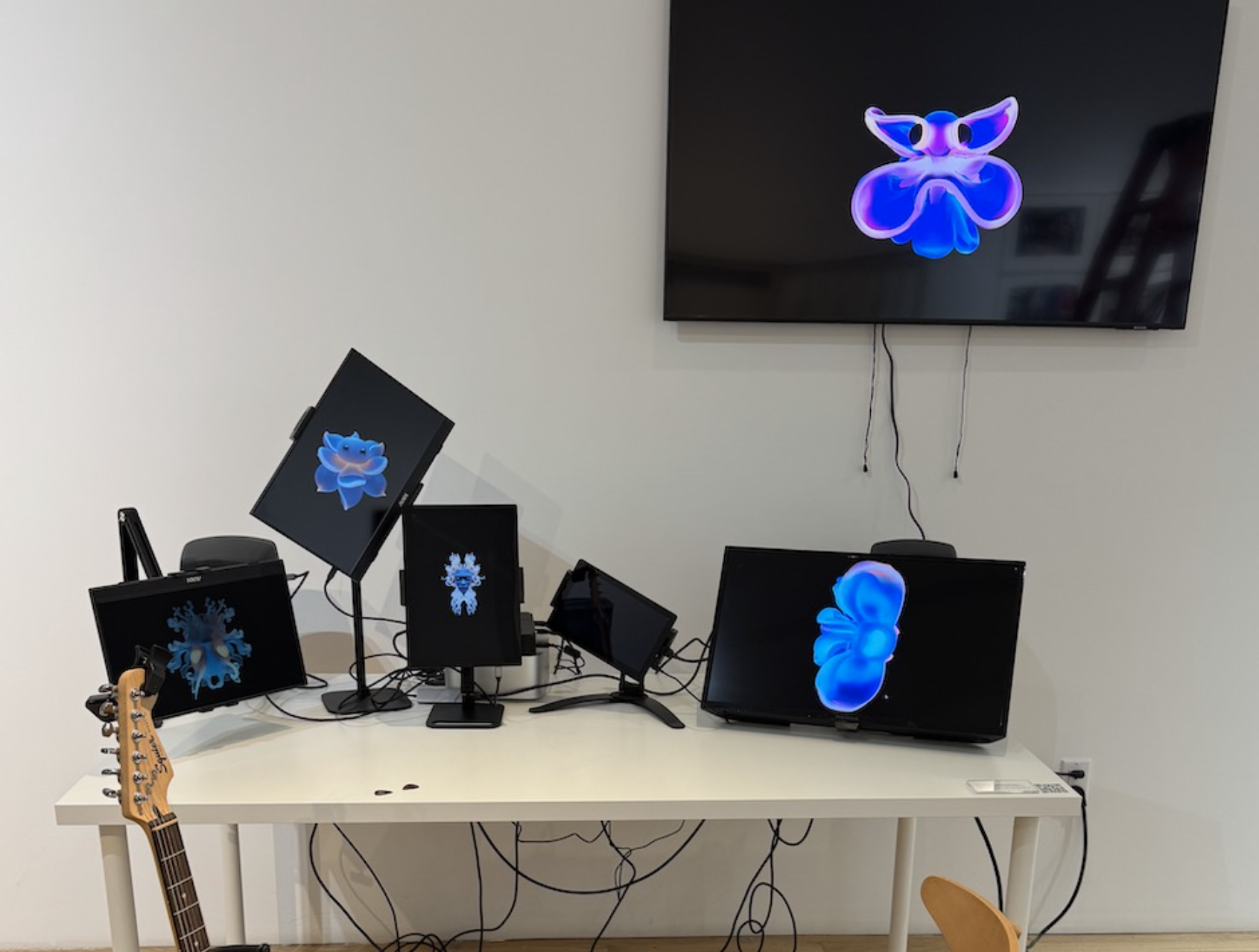
Projects like Hexad and A Child, an AI and an Artist: Haechi reveal the creative interplay between the human mind, artistic practice and AI systems. The process itself raises questions about true ingenuity and speculation about whether AI may be inspired by the history of art and music, inventive and able to create novel and unique ideas not conceived by humans ever before; in other words, is AI merely an assistant or agent, or can it lead and pave the way to new creative destinations, that is, can it be an artist (or many artists depending on the number of models and agents at play) in the same way humans are certified artists and innovators?
In this interview, we discuss, on the one hand, themes of power, inequality, and fear in AI futures, and, on the other hand, the values of human emotion, human-AI harmony, and authentic creative expression.
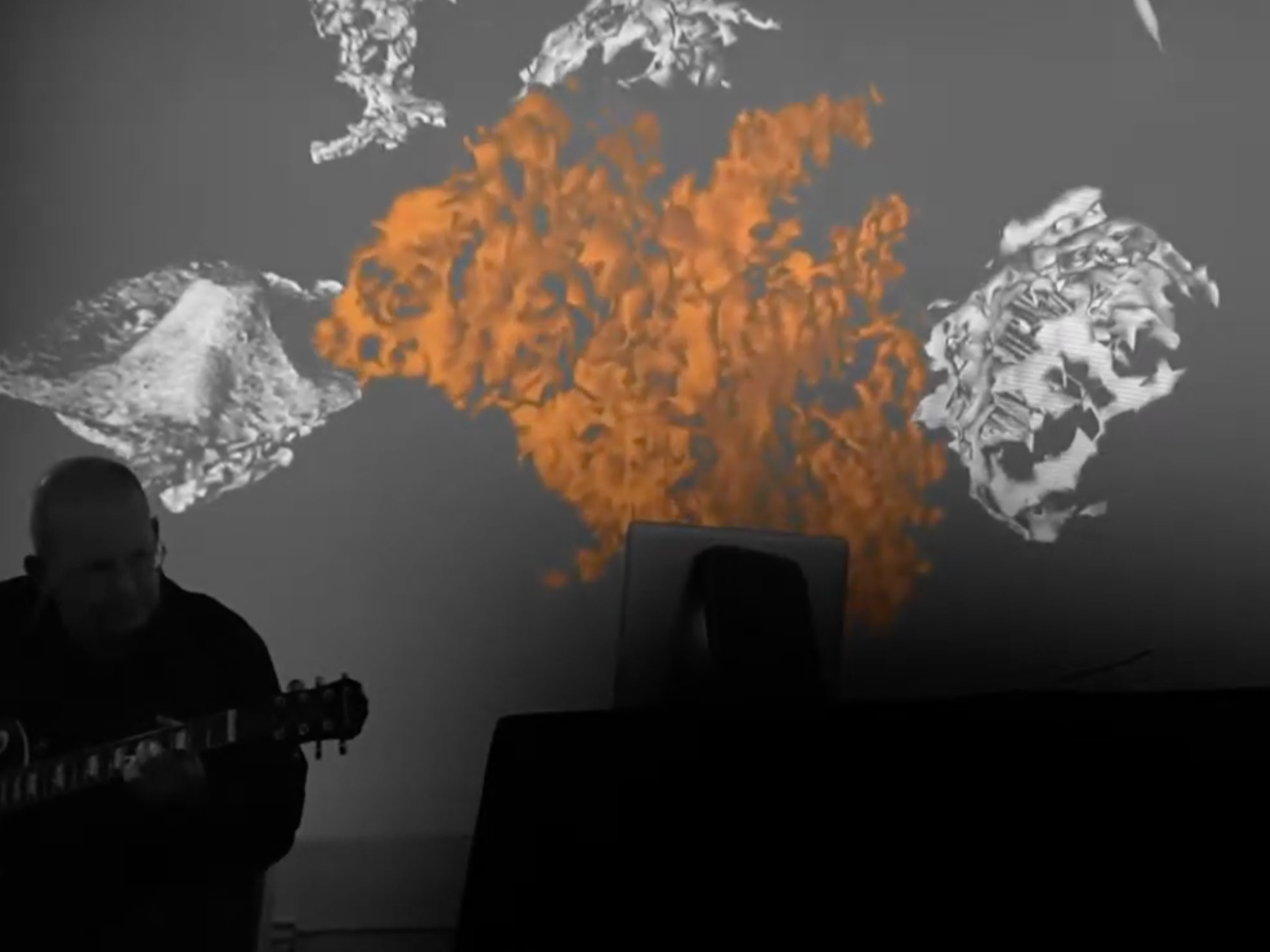
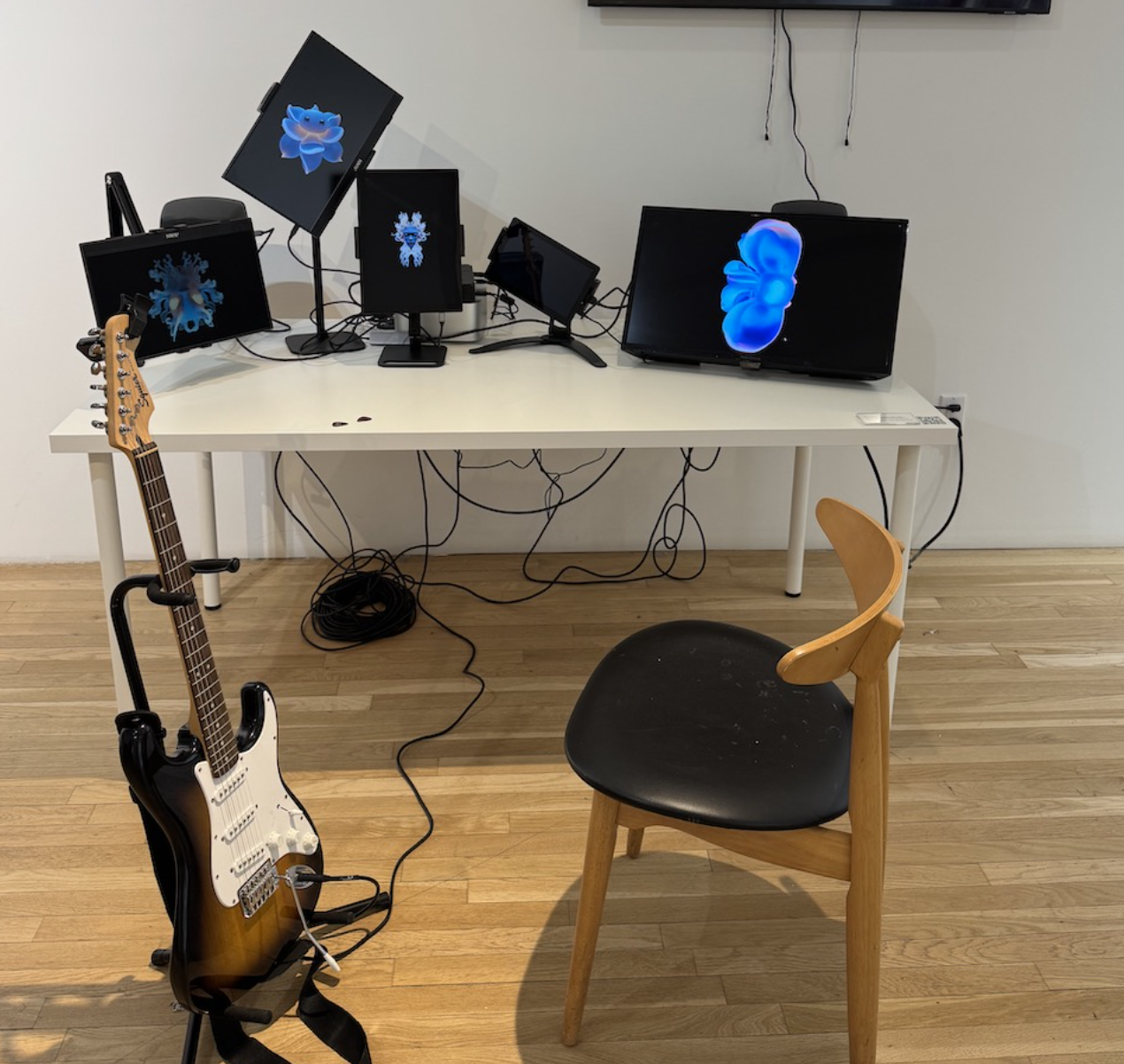
The Guitarist and Aural Fauna: Duet for Human and Machine-Generated Creatures, 2020.
You’ve described your work as seeking “harmony in coexistence with the unfamiliar, including AI.” What if that coexistence fails? What does disharmony between humans and AI look or feel like in your art?
The failure of coexistence would result in discrimination, hate, and violence, as we have seen in human history. It could empower authoritarians to justify their actions and give a small number of people control over AI technology, thus increasing power inequality. One can certainly choose to avoid. or to fight against AI technologies, and I worry it only helps seize control of AI, which is already everywhere in our lives. Coexisting with our new neighbour from a different world would not mean we allow everything from them; it would mean respecting each other and figuring out ways to help each other. Disharmony between humans and AI in my art would look terrifying, intense, and violent. For example, if an AI constantly erases or changes my talk, or if an AI constantly erases or covers up what I draw with a splash of colours (perhaps I should make these!). It would be a metaphor for human society, not an artwork to make people fear AI. I think there is more than enough hatred and fear in the human world at this point.
After speaking about coexistence and the potential for disharmony, it’s hard not to wonder what happens on the other side of that spectrum (when connection becomes deeper, even emotional!).
Is there a future where AI truly embodies emotional intelligence? How would you want an AI collaborator (this “new neighbour,” as you call it) to understand art in ways current systems cannot? And do you think such understanding is even desirable?
To answer this question, I'll need a definition of emotional intelligence. Technically, human emotions are the result of biological changes in our bodies. However, we understand human emotions by observing how they manifest on human bodies and in language. AI, especially those with a physical body, such as robots or screens, can imitate appearance. For example, smiling faces or sentences describing their fear and so on. For humans, it reads as emotional responses, which is why lots of people would rather talk to AI about their feelings and frustrations with human society than to their human peers nowadays. From the perspective of art (in my opinion), emotions as expressions are triggers or doorways that open possibilities for understanding the unique perspective the artist offers. It could be a thin thread connecting two people's different worlds. From Klimp's painting, some might read sadness, some might read glamorous and that might open up the audience's insights.
By understanding how human emotions and expressions in art are connected, yes, I think AI will be able to make more influential (to humans) artworks. This process could help us understand how we make art and why humans have been making art. This could also yield more satisfying results for those who have not had art education but desire to create artworks. As a new neighbour who works with and for humans, I think that can be an asset.
I personally am more interested in fostering creativity that is not a mere mimicry of the history of art in human history. Not sure how it can be done at this point, but the unique perspective an AI can provide, because it is not human but has learned human language, such as art, would be very intriguing to me.
“By understanding how human emotions and expressions in art are connected, yes, I think AI will be able to make more influential (to humans) artworks.”
There are still some years before we see (if one believes) truly machine-native AI art. Many people assume AI-generated art will always mirror human culture, but I’m drawn to the idea of creativity emerging entirely from AI: as if AI lived on a parallel “planet” with its own sensory entities, objects, environments, and worldviews, and with artistic expression entirely alien to us, developed without any human input. Might we start seeing human artwork imitating machine-native AI art as it evolves? It seems the creators of AI have ignored the boundaries necessary to protect artistic IP, especially given that AI has scraped the entire internet and more for artworks to learn from. So the next question becomes: what happens to authorship and artistic agency when we share the creative field with non-human AIs?
When/if the day comes that AI systems can generate idiosyncratic ideas and art forms that diverge from what we (humans) understand as art, who is assigned authorship? Is it the human who designed the model, the collective of human artworks the system learned from, the AI system itself as it evolves, or somewhere in between? And how does that shift your own sense of artistic agency in your creative practice?
Very good question. I would love to see that. Up to now, art-making AI has relied on multiple human surrogates, including researchers and developers, prompt engineers, and human agents like curators who accept the results as art. So I would say the authorship goes to the collective group of people and the AI.
I believe the myth of the "genius artist" persists only for the commercial value of artworks in contemporary art, and it might be time to recognise that most famous artworks have been created through a group effort.
At some point, if a machine produces something we cannot easily understand, there is a chance we might not recognise it as art anyway. However, experiencing that creative product or artwork could provoke new perspectives or force us to question ourselves and our world; that must be a notable moment in art.
In that case, the authorship may belong to that AI, since we don't typically credit the canvas builder, the art school professor, or a precursor work that inspired a human artist. More importantly, would the AI even want the authorship? Machines have no desires, and I don't think they would care.
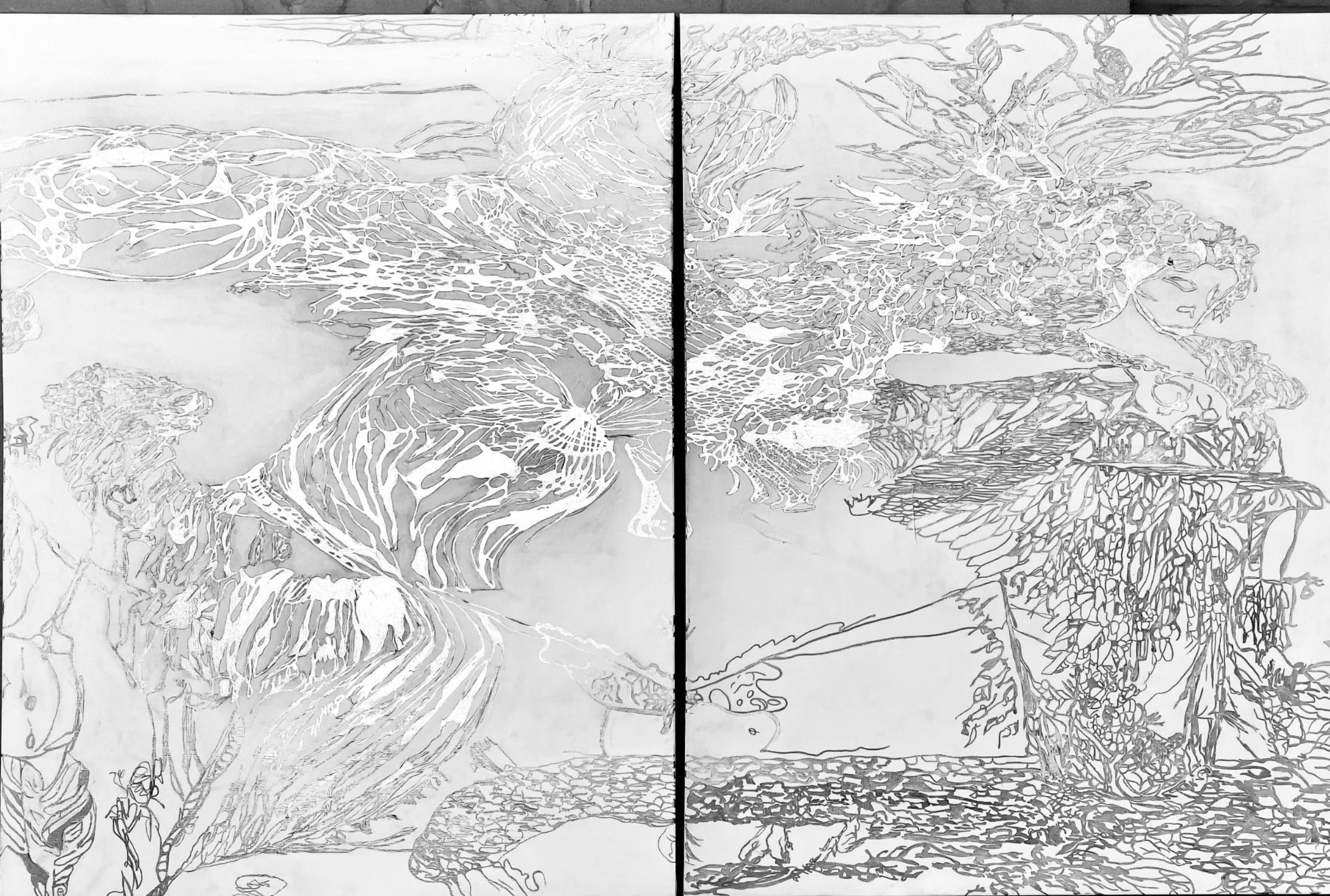
“Equilibrium: A Child, an AI, and an Artist,” 2023
Could you share a project or artwork that illustrates your collaborative approach between human and non-human entities? How did that relationship take shape in your process, what did it reveal about authorship, agency, and coexistence in creative practice, and how does working on projects like these has, if at all, changed your own artistic practice.
The Guitarist and Aural Fauna: Duet for Human and Machine-Generated Creaturesis a performance that premiered in San Diego in 2020. The Aural Fauna is a species whose form and voice are generated by ML algorithms. It listens to Donald D. Craig's guitar playing, then sings in an attempt to harmonise with the guitar sound. In return, the guitarist continues his improvised song based on the creature's singing. It goes back and forth until one of them stops. In this work, the music is co-composed by both human and non-human participants.
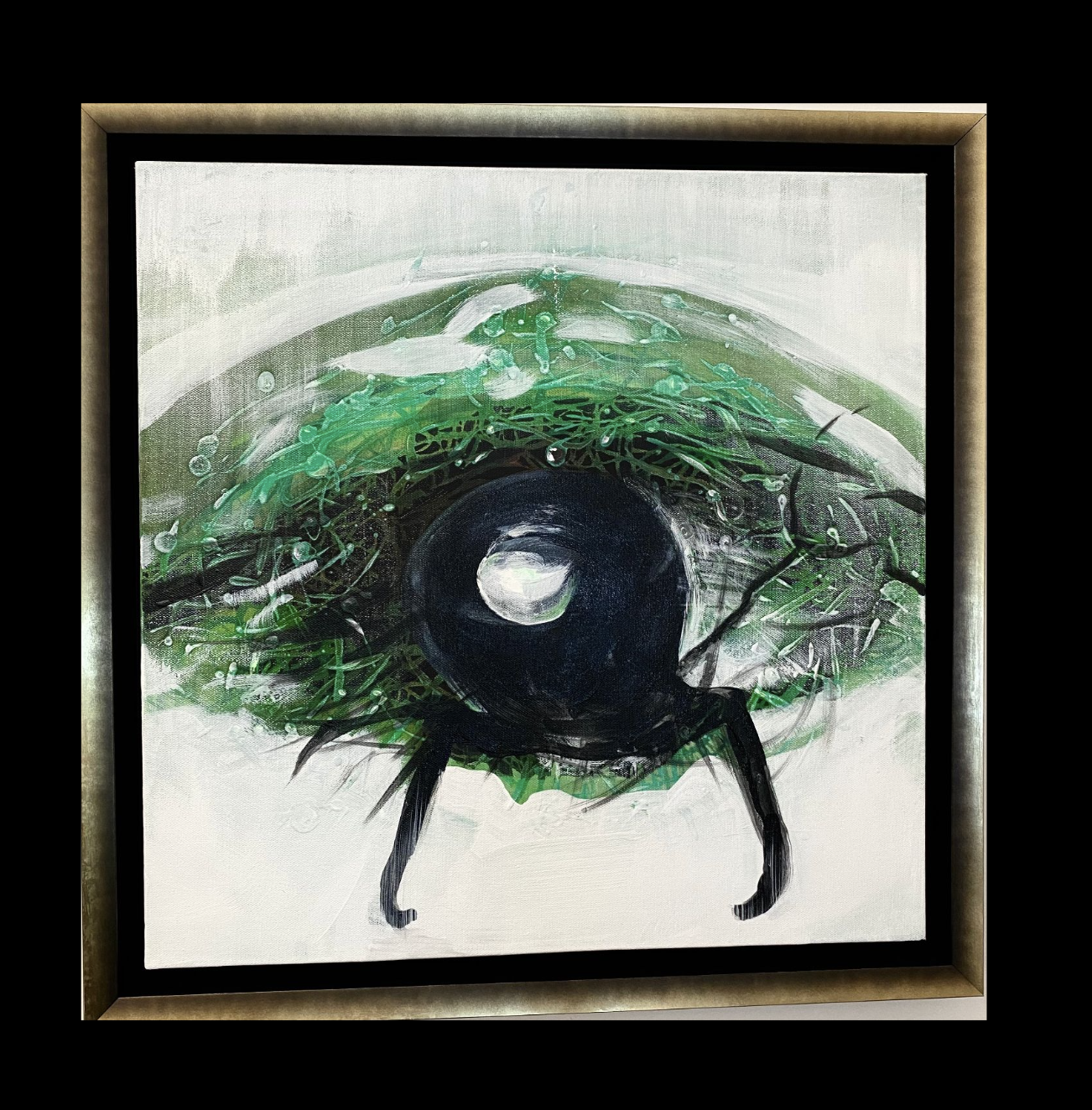
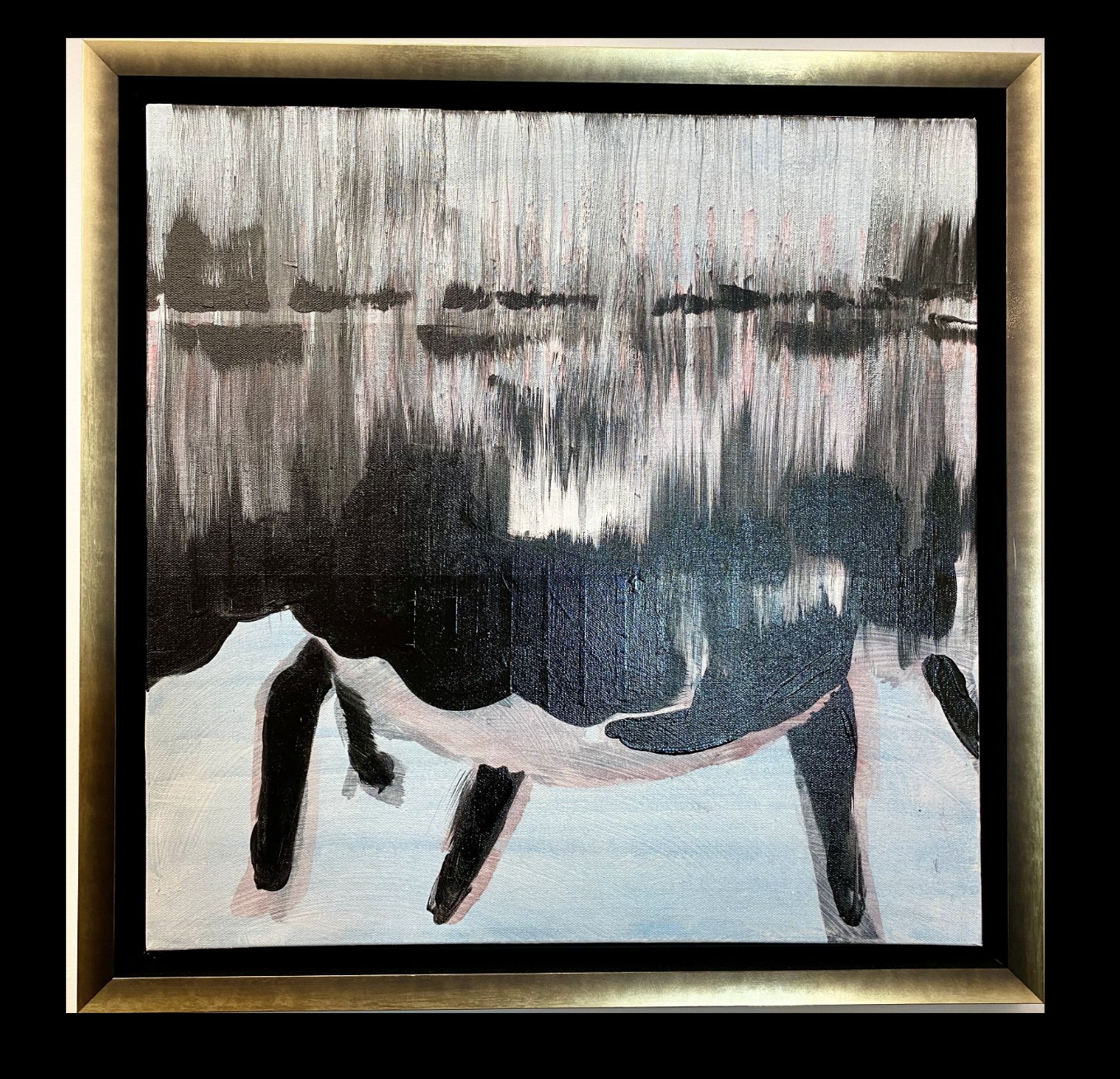
Another project is Equilibrium: A Child, an AI, and an Artist,created in 2023. This acrylic painting started with a small drawing of my son, Sahn-Barnabas Poczos. Then an AI model (using Stable Diffusion) created an "outpainting". That means the AI model predicted how the seed drawing could be extended and continued drawing it. If this were a human-human collaboration, we would say the collaborator used their imagination to expand the drawing or something along those lines. Once we finished the digital drawing, my son and I copied it onto two large canvases using pencils and painted it silver. In this experiment, the initial inspiration for the painting came from my son, AI refined it, and then human labour represented it in a traditional art form. It took my son and me a long time to complete the painting. During that time, we enjoyed those moments of pure labour that felt almost like meditation. I also reflected on how role reversal was occurring between humans and machines, since we were essentially operating as very slow inkjet printers.
In terms of authorship, it becomes more complicated because the AI model acts as a surrogate for groups involved in designing, developing, and imposing certain restrictions on its distribution. Legally, the user is responsible for the generated media at this point. However, I like to call AI my co-creator because my experience with it is not too different from collaborating with other humans. I'm not in complete control of its response, and sometimes it pleasantly surprises me. I enjoy the process just as much as when I work with my child. The real difference is that a child is harder to work with.
Artists, especially contemporary and media artists, have emphasised the importance of the process in art. My experience with AI has allowed me to let go of control even more than when working with code, and it has helped me embrace the process even more.
“AI will continue learning from human-generated data, and I hope we will also see AI evolve alongside us, shaped by the way we live, create, and teach it.”
As AI continues evolving beyond a tool and toward something more collaborative, what do you think (or hope!) artists will want to protect, and what would they be willing to let go of? And ultimately, what do you hope your AI investigations and future artworks can reveal about AI and about human nature?
It depends. If we think about human-to-human collaborations, every artist brings something different to the table. Some artists have highly developed technical skills that have taken years to cultivate. They may use AI to explore ideas they have never attempted before while relying on their own techniques and expertise to realise them. Other artists may have compelling ideas but lack the technical knowledge to execute them. In those cases, AI can help them identify the tools, methods, or techniques that best fit their vision. Some artists have powerful stories they want to tell, and AI can assist in transforming those stories into visual, auditory, or other creative forms.
At the same time, artists deserve strong protection for their work, especially against the indiscriminate scraping of their data for AI training. The creative process is deeply personal and authentic, and every artist develops a unique way of making. As a result, there is no single way to collaborate with AI; each artist will integrate it into their practice differently.
Ultimately, I hope AI encourages us to see ourselves more clearly through the mirror it holds up to humanity. By reflecting our values and biases, AI can help us better understand what we want to preserve and what we want to change to create a better world. AI will continue learning from human-generated data, and I hope we will also see AI evolve alongside us, shaped by the way we live, create, and teach it.
Welcome to The Art in STEAM podcast
Expect to spark ideas through personal stories told by women in STEAM, from robotics to technology, digital media and the climate crisis.